

For growing CPG brands, filling is often the first operational bottleneck. Production lines require specialized equipment, trained operators, strict quality standards, and enough flexibility to handle new SKUs, changing formulas, or fluctuating demand. Building this capability in-house is expensive, and scaling it can be even more challenging. That’s where contract filling comes in.
A trusted filling partner provides the equipment, expertise, and operational capacity to fill liquids, powders, solids, and pastes with accuracy and speed without requiring you to expand your internal production footprint.
If you’ve ever wondered how contract filling works or whether it’s the right move for your brand, this guide breaks down the process, the benefits, and how the right partner can support your growth.
What Are Contract Filling Services?
Contract filling services allow brands to outsource product filling to a specialized partner equipped to handle precise, high-volume production. Depending on your product type, a filling partner may work with:
- Liquids (beverages, syrups, oils, cleaners, supplements)
- Powders and granules (protein powders, drink mixes, seasoning blends)
- Solids (candies, tablets, small-format items)
- Viscous products (creams, gels, sauces, pastes)
But filling is rarely a standalone step. Most brands rely on contract filling and packaging partners who also support:
- Bottle or jar filling
- Pouch, stick pack, and sachet filling
- Capping, sealing, and induction lining
- Coding, labeling, and inspection
- Retail-ready or bulk packaging
- Fulfillment and distribution
In other words: filling partners don’t just support production. They help you build reliable, scalable systems.
How Contract Filling Works
The contract filling process is designed to be efficient, repeatable, and flexible. While every product requires unique attention, most filling workflows follow six core stages.
1. Product Intake and Specification Review
A filling partner begins by reviewing your technical requirements:
- Product viscosity or flow characteristics
- Packaging type (bottle, jar, pouch, stick pack, etc.)
- Fill volume and accuracy standards
- Batch sizes
- Compliance or certification requirements (FDA, GMP, SQF)
This ensures the right equipment and processes are used from day one.
2. Packaging and Materials Coordination
Depending on the project, the filling provider may source packaging or run packaging you supply. This phase includes confirming:
- Container size and materials
- Cap or closure type
- Labeling needs
- Coding requirements
- Carton or case packing design
The goal is to make sure every component runs seamlessly on the line.
3. Product Preparation, Blending, or Mixing (If Required)
Some products arrive ready to fill. Others require thorough preparation before entering the line.
For example:
- Powders may require homogenizing or breaking up clumps
- Liquids may need agitation or temperature adjustments
- Pastes may require controlled handling to ensure consistent flow
At MaxUS, this step is handled in controlled environments, including clean rooms, depending on the product type.
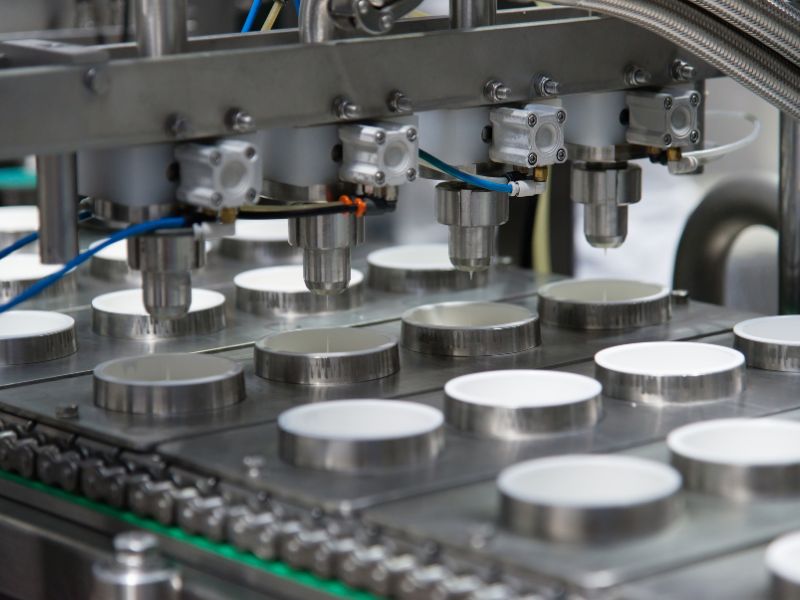
4. Filling on Automated Lines
This is the core of contract filling services, and where the partner’s equipment matters most.
Depending on your packaging format, filling may involve:
- Bottle or jar filling for liquids, powders, or granules
- Stick pack lines for single-serve powdered products
- Sachet and pouch filling for small-format or multi-serve applications
- Bulk filling for industrial or upstream manufacturers
Accuracy, speed, and consistency are the priorities. Automated controls ensure precise fill weights or volumes across every run.
5. Quality Assurance and Line Inspection
During and after filling, QA teams ensure your product meets compliance and retailer standards. This often includes:
- Checkweighing
- Seal integrity testing
- Metal detection
- Lot code verification
- Label accuracy
- Retention samples
- Final QC release
A strong filling partner feels like an extension of your own quality team, not just a vendor checking boxes.
6. Packaging, Palletizing, and Fulfillment
After the product is filled, it moves through the final stages:
- Capping or sealing
- Labeling + verification
- Case packing
- Palletizing
- Stretch-wrapping
- Storage or direct fulfillment
Full-service partners streamline the process even further by offering warehousing or nationwide distribution.
Why Brands Choose Contract Filling Services
Outsourced filling is more than a way to save time; it’s a strategic operational advantage.
Brands typically rely on contract filling for:
Scalability without capital investment
No need to purchase new equipment or expand floor space.
Faster production and shorter lead times
Specialized machinery increases output and reduces bottlenecks.
Higher accuracy and reduced waste
Experience matters. Skilled operators mean fewer errors and more consistency.
Flexibility to run multiple SKUs
Ideal for brands managing frequent flavor drops, limited releases, or seasonal demand.
Compliance and quality support
A good partner brings a higher level of documentation, traceability, and QA rigor.
When done well, contract filling becomes a core component of long-term operational strategy, not just a temporary fix.
How MaxUS Approaches Contract Filling
At MaxUS, filling is built around flexibility, precision, and partnership.
We support brands of all sizes with:
- Automated liquid and powder filling
- Jar, bottle, pouch, and single-use packaging
- Clean room environments for sensitive products
- Integrated blending and mixing
- Full-service packaging and fulfillment
- Engineering expertise to tailor solutions to your process
Our team doesn’t just run your product. We work to understand your operation, adapt to your constraints, and build systems that grow with you.
Key Takeaways
- Contract filling services allow brands to outsource filling for liquids, powders, solids, and pastes.
- The process includes intake, packaging prep, product preparation, filling, QA, and final packing.
- Outsourced filling helps brands scale quickly, reduce costs, and maintain quality.
- Full-service partners like MaxUS combine filling, packaging, and fulfillment for a truly turnkey solution.
If you’re looking for a filling partner that brings precision, speed, and collaboration to every run, MaxUS is built for you. Our contract filling and packaging capabilities help CPG brands scale confidently, whether you’re launching a new SKU or meeting growing demand.Let’s talk about how our filling lines can support your next production run.