

Brands exploring private-label manufacturing often do so to bring new products to market quickly without bearing the full cost or complexity of custom formulation. Private-label programs enable CPG companies to scale quickly, reduce development time, and launch high-quality products using proven formulas and ready-made packaging configurations.
In a competitive CPG environment where innovation cycles are short and speed matters, private-label partnerships offer brands an efficient way to expand product lines, test new categories, and meet customer demand without overextending internal teams.
What Is Private Label Manufacturing
Private label manufacturing is a model where a manufacturer produces a complete, ready-to-brand product that retailers or CPG companies can sell under their own label. The manufacturer owns the formula and production process. The brand selects the product, chooses the packaging or design, and positions it in the market.
Private label contract manufacturing supports:
- Faster entry into competitive categories
- Low development costs
- Predictable production timelines
- High-quality, pre-tested formulas
- Easy SKU expansion
- Consistency across every run
This approach allows brands to focus on marketing, distribution, and growth rather than formulation and production.
Why Private Label Manufacturing Accelerates CPG Growth
Private label is used across food, beverage, nutrition, beauty, personal care, household goods, and specialty categories because it creates a faster path to market. It reduces risk and gives brands access to reliable products without costly R&D or long lead times.
Here is why the model works so well.
1. Faster Time to Market
Private label manufacturers already have formulas that have been tested, perfected, and validated for quality. Brands can skip lengthy development cycles and move straight into packaging and launch planning.
This is especially valuable when:
- Entering a trend-driven category
- Responding to retailer demand
- Adding incremental products quickly
- Competing against established brands
Speed is one of the strongest advantages of private label manufacturing.
2. Lower Development Risk
Creating a new formula requires testing, pilot runs, stability studies, and several rounds of refinement. Private label eliminates these steps because the manufacturer has already completed them.
This means brands avoid:
- High R&D costs
- Potential formulation failures
- Long testing cycles
- Ingredient sourcing challenges
Teams can invest in sales, marketing, and scaling instead of product development.
3. Flexibility to Add or Adjust SKUs
Brands using private label contract manufacturing can expand SKU count with minimal effort. Because formulas are already available, adding a new product is as easy as choosing from an established lineup.
SKU flexibility is ideal for:
- Seasonal offerings
- Limited edition drops
- Retailer exclusive packs
- Multi-flavor or multi-scent lines
- Emerging trends
It allows brands to test new opportunities quickly before committing to full-scale development.
4. Predictable Cost Structure
Private label products typically have stable ingredient costs and manufacturing pricing. This allows teams to forecast margins and inventory budgets more accurately.
A predictable cost structure supports:
- Better financial planning
- More reliable retail negotiations
- Higher confidence in scaling
- Reduced operational surprises
For brands with tight budgets or rapid expansion plans, this stability is essential.
5. Reduced Operational Complexity
Since the manufacturer handles formulation, batching, and production, brands avoid taking on additional equipment, staff, or facility space.
This reduces internal load on:
- Quality teams
- Production staff
- Procurement
- Inventory management
- Compliance teams
Brands stay focused on growth while the private label partner manages production.
When Private Label Manufacturing Is the Right Fit
Private label manufacturing is an ideal choice when brands want to scale quickly or reduce operational complexity. It is especially effective in the following situations.
1. Launching a New Line or Entering a New Category
Brands can enter new categories quickly by selecting pre-developed formulas and packaging. This reduces both cost and risk.
2. Competing in Fast-Moving Markets
Trends move quickly in categories such as supplements, beauty, and nutritional products. Private label helps brands stay competitive without long development cycles.
3. Retail Driven Opportunities
Retailers often ask for fast turnarounds or exclusive offerings. Private label allows brands to respond immediately with high-quality, ready-to-produce formulas.
4. Early Stage Brands
Startups often lack the resources required for custom product development. Private label gives them a way to begin selling quickly while they build the brand.
5. Expanding SKU Variety Without Long Lead Times
Brands that rely on seasonal assortments or multiple flavor profiles benefit from the speed and flexibility private label provides.
How Private Label Works Alongside Contract Manufacturing
Private-label and custom contract manufacturing often coexist. Many brands launch with a private label for speed and then transition to full contract manufacturing as they expand or develop proprietary formulas.
The two models support each other in several ways:
- Private label provides immediate market entry
- Contract manufacturing supports long-term differentiation
- Both models help brands scale efficiently
- Both reduce operational overhead
This hybrid approach is common among growing CPG brands.
How MaxUS Supports Private Label and CPG Manufacturing Growth
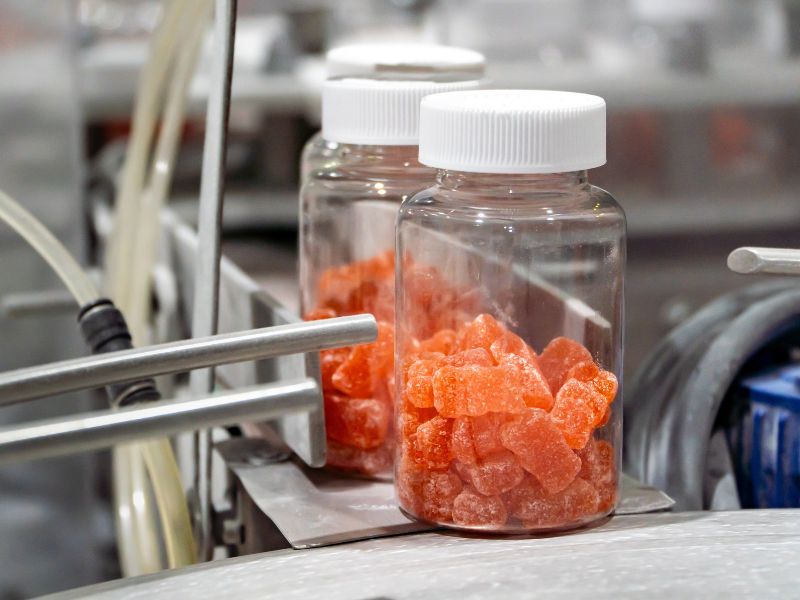
MaxUS supports brands that use private-label manufacturing by offering flexible packaging, filling, and fulfillment services to prepare products for retail and distribution.
Our capabilities include:
- Packaging for pouches, jars, bottles, stick packs, and sachets
- Blending and mixing for powders, liquids, pastes, and granules
- Clean room production
- Automated and semi-automated manufacturing lines
- Retail-ready packaging and bulk packaging
- Fulfillment and distribution support
- Engineering and process expertise
Our goal is to help brands scale quickly while maintaining consistent product quality.
Key Takeaways
- Private-label manufacturing enables brands to launch products quickly.
- It reduces development time, cost, and risk.
- SKU flexibility helps brands respond to market trends and retailer demand.
- Private label often works alongside contract manufacturing as brands grow.
- MaxUS offers private-label products with high-quality packaging and fulfillment solutions.
If your brand wants to expand into new categories, grow your SKU count, or bring products to market faster, MaxUS can help. Our team provides packaging, filling, and operational support to turn private-label products into scalable, retail-ready offerings.Connect with us to explore a private label partner strategy that fits your goals.