


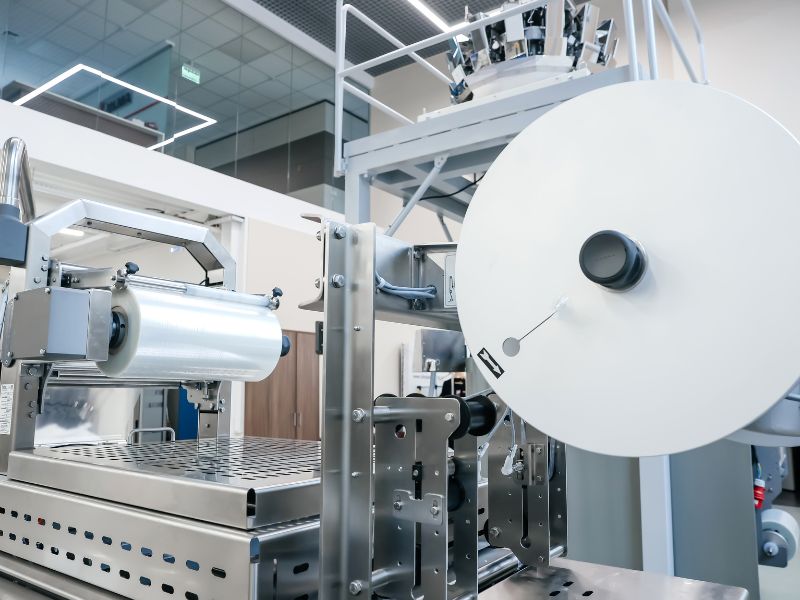
Many CPG companies begin searching for scalable manufacturing solutions when demand spikes, retail accounts increase, or production bottlenecks start limiting growth. Scalable manufacturing ensures operations are easy to scale without adding unnecessary overhead or compromising product quality. For brands preparing to grow, designing systems that expand with demand is one of the most important strategic decisions they can make.
Whether a team uses internal production, contract manufacturing, or a hybrid model, scalability depends on adaptable systems, flexible equipment, and strong operational planning.
What Is Scalable Manufacturing
Scalable manufacturing includes processes, equipment, and operational structures that can increase output efficiently as demand grows. Rather than relying on rigid systems that break down under pressure, scalable systems are designed to adjust quickly and support multiple product types, run sizes, or packaging formats.
Key characteristics of scalable manufacturing include:
- Flexible equipment
- Modular production lines
- Efficient changeovers
- Contract manufacturing partnerships
- Low minimum order quantity (MOQ) options for early-stage testing
- Automation where it adds consistency or reduces labor
- Documented processes that scale predictably
The goal is to grow without disruption.
Why Scalable Manufacturing Matters for Growing Brands
Brands grow at different speeds, and customer demand often shifts quickly. Scalable manufacturing gives teams the ability to respond without risky capital investment or operational bottlenecks.
Scalability supports:
- Faster entry into retail
- Lower production risk
- Reduced operational strain
- Greater SKU flexibility
- Higher throughput during peak seasons
- Better cost structure over time
Brands that plan for scalability early avoid costly corrective measures later.
Essential Elements of Scalable Manufacturing Systems
Below are the core components that make manufacturing easier to scale as your brand grows.
1. Flexible and Modular Equipment
Modular equipment allows teams to switch between different packaging formats or product types with minimal downtime.
Examples include:
- Multi-functional pouch and bagging machines
- Bottle and jar filling systems with interchangeable parts
- Stick pack and sachet lines that adjust for size variations
- Blenders that support multiple batch sizes
Flexible equipment ensures that growth does not require entirely new lines.
2. Automation That Matches the Stage of Growth
Automation supports scalable manufacturing by reducing manual labor, improving accuracy, and increasing throughput. Growing brands do not always need full automation but do benefit from targeted automation such as:
- Checkweighers
- Labelers and coders
- Automated pouch fillers
- Carton erectors
- Conveyor systems
- Vision inspection technology
Automation should evolve with demand, not exceed it.
3. Efficient Changeover Processes
Fast changeovers are essential for brands running multiple SKUs or frequent line shifts. Inefficient changeovers create lost hours, higher labor spend, and reduced capacity.
Strong changeover systems include:
- Standardized procedures
- Tool-less changeover parts
- Clearly labeled equipment
- Trained operators
- Production schedules that minimize unnecessary shifts
Changeover efficiency is one of the biggest drivers of scalability.
4. Contract Manufacturing or Co-Manufacturing Support
Many brands rely on contract manufacturing to expand without major equipment purchases. Contract manufacturers and co-manufacturers provide:
- Additional capacity
- Overflow production
- Specialty equipment
- Skilled operators
- Faster startup for new SKUs
This reduces capital investment and operational bottlenecks.
A hybrid manufacturing model can offer the best of both worlds.
5. Production Planning and Forecasting Systems
Scalable operations depend on clear forecasting and structured planning. Brands should use:
- Demand planning
- Capacity modeling
- Batch scheduling
- Material requirement planning (MRP)
- Real-time production monitoring
Strong planning ensures that operations scale smoothly rather than reactively.
6. Documented SOPs and Repeatable Workflows
Standard operating procedures are essential for growing brands. They ensure that production processes remain consistent even as teams expand or operators change.
Effective SOPs support:
- Quality control
- Efficiency
- Faster training
- Predictable production
- Easier scaling across multiple locations or partners
Documentation protects the brand as it grows.
How Growing Brands Can Prepare for Scalable Manufacturing
If a brand wants easy-to-scale operations, preparation is key. Below are practical steps growing companies should consider.
Start with variable-capacity partners
Use partners who support low MOQs early and higher volume later.
Avoid locking into rigid equipment
Choose equipment that adjusts to multiple SKU types.
Align packaging decisions with growth
Select formats that run efficiently on automated lines.
Build relationships with co-manufacturers early
This ensures smooth transitions during peak growth.
Run pilot batches before full-scale runs
Helps validate processes before increasing output.
Review cost per unit at each growth stage
Scalability should reduce long-term cost, not increase it.
How MaxUS Supports Scalable Manufacturing
MaxUS helps brands build scalable manufacturing systems by offering flexible, precision-driven production support across powders, liquids, granules, and pastes.
We support scalability through:
- Blending and mixing capabilities for multiple product types
- Automated and semi-automated filling
- Multi-format packaging such as pouches, jars, bottles, stick packs, and retail-ready options
- Clean room production for sensitive formulas
- Rapid changeover processes
- Scalable capacity for pilot runs, small batches, and high-volume demand
- Fulfillment and distribution support
Our systems are designed to adapt as your brand evolves, providing stability at every stage of growth.
Key Takeaways
- Scalable manufacturing ensures operations grow efficiently with demand.
- Flexible equipment, automation, and contract manufacturing support are essential elements.
- Strong SOPs and forecasting systems help prevent bottlenecks.
- MaxUS provides scalable production capabilities for brands preparing for growth.
If your team is building a scalable manufacturing strategy, MaxUS can help. Our flexible systems, advanced equipment, and partner-first approach support predictable growth and smooth operational expansion. Connect with us to explore a scalable manufacturing solution built around your goals.