


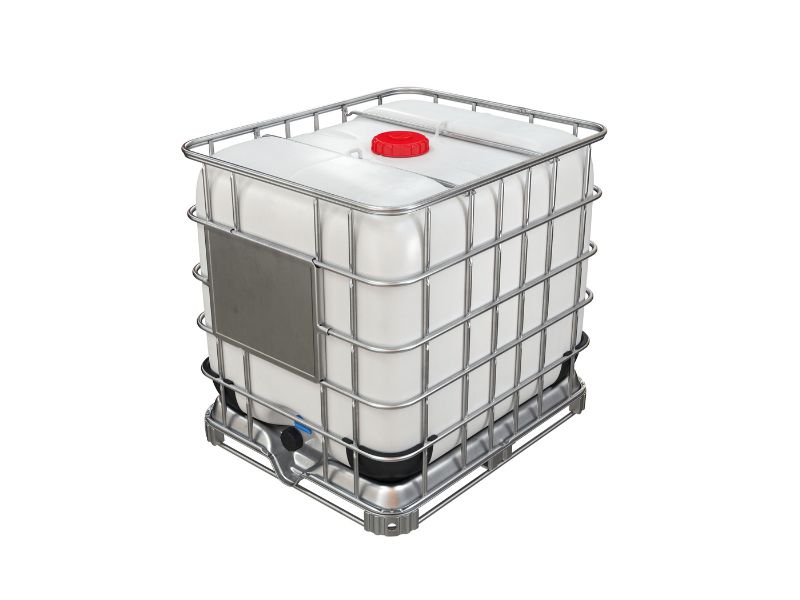
Many manufacturers rely on industrial packaging and bulk packaging to move materials efficiently through high-volume production environments. As demand increases or product lines diversify, brands often reassess their packaging systems to reduce cost, streamline storage, and improve throughput. High volume packaging solutions, such as pails, drums, totes, and super sacks allow teams to scale without creating logistical bottlenecks.
Industrial packaging does more than hold a product. It drives efficiency, supports safe transport, and ensures that materials flow smoothly between blending, filling, and distribution.
What Is Industrial and Bulk Packaging?
Industrial packaging refers to packaging formats designed for large quantities of product, usually for B2B, manufacturing, or upstream processing. Bulk packaging is a subset of industrial packaging that focuses on high-capacity containers that minimize handling and maximize storage.
Common industrial and bulk formats include:
- Super sacks
- Totes
- Drums
- Pails
- Bulk cartons
- Pallet-sized flexible containers
These packaging types are used across food ingredients, chemicals, powders, liquids, cleaning products, nutraceuticals, building materials, and more.
Why Bulk and Industrial Packaging Matters in High Volume Production
High volume packaging improves operational efficiency by reducing the number of containers handled, stored, or processed. This creates measurable savings in:
- Labor
- Material handling
- Storage footprint
- Transportation cost
- Line changeover time
- Waste reduction
Bulk containers also offer improved durability and protect products during long distance transport or warehouse transfers.
Types of Bulk and Industrial Packaging
Each bulk format supports different product types, flow rates, and handling systems. Choosing the right option depends on your material and distribution needs.
Super Sacks
Super sacks, also known as FIBCs (Flexible Intermediate Bulk Containers), are large woven polypropylene bags that hold hundreds to thousands of pounds of material.
Ideal for:
- Powders
- Granules
- Pellets
- Dry ingredients
Benefits include:
- Lower cost compared to rigid containers
- Easy stacking and transport
- Low storage footprint when collapsed
- Fast filling and discharge options
Totes
Totes are rigid, reusable containers made from plastic or metal. They are often paired with pumps or valves for controlled dispensing.
Ideal for:
- Liquids
- Viscous materials
- Concentrates
- Oils and syrups
Benefits include:
- Strong structural integrity
- Secure sealing capability
- Compatibility with automated dispensing systems
- Reusability for cost control
Drums
Drums provide durable storage for liquids, powders, and semi-solids. They are available in plastic, steel, and fiber options.
Ideal for:
- Chemicals
- Food ingredients
- Powders
- Extracts
Benefits include:
- High durability
- Easy stacking and transport
- Compatibility with industrial equipment
- Wide availability and cost efficiency
Pails
Pails offer small-batch industrial packaging for manufacturing and distribution needs.
Ideal for:
- Pastes
- Creams
- Short-run industrial products
- Bulk items portioned for smaller customers
Benefits include:
- Lightweight
- Cost effective
- Easy to handle
- Strong moisture and contamination protection
How Bulk Packaging Supports Cost Efficiency
High volume packaging helps brands reduce operational costs across the supply chain by improving flow, reducing touchpoints, and lowering material expenses.
Key cost advantages include:
1. Lower Unit Packaging Cost
Packaging fewer units with higher fill content reduces packaging material cost.
2. Reduced Labor
Fewer containers mean less filling, sealing, and labeling.
3. Faster Line Speeds
Bulk containers run on equipment designed for high throughput and minimal changeover.
4. Lower Freight Cost
Optimized weight and cube dimensions improve shipping economics.
5. Better Inventory Management
Bulk storage simplifies warehouse organization and reduces movement of small containers.
How Industrial Packaging Supports Scalability
Scaling production requires packaging that can handle large volumes without slowing operations. Bulk and industrial packaging supports this by offering:
- Faster handling
- Higher container capacity
- Greater protection during transport
- Compatibility with automated systems
- Simplified material transfer
Brands often move from small containers to bulk formats once volume increases and efficiency becomes a priority.
Where Industrial Packaging Fits in the Production Process
Industrial packaging plays a role across a wide range of workflows:
Upstream manufacturing
Ingredients are stored, transported, or blended in bulk before portioning.
Midstream processing
Semi-finished goods move between mixing, blending, and filling systems.
Downstream distribution
Bulk products ship to contract manufacturers, distributors, or B2B customers.
End-user delivery
Industrial buyers, such as manufacturers or contractors, often prefer bulk formats for ease of use.
Bulk packaging supports a continuous flow from production to delivery.
How MaxUS Supports Bulk and Industrial Packaging Needs
MaxUS provides high volume packaging solutions that integrate seamlessly with your production environment. Our systems are built for efficiency, precision, and adaptability.
We support:
- Super sacks for powders and granules
- Totes for liquids and concentrates
- Drums for chemicals, food ingredients, and semi-solids
- Pails for smaller industrial or specialty batches
- Clean room environments for sensitive materials
- Automated and semi-automated filling
- Retail ready or bulk ready configurations
- Fulfillment and distribution support
Our goal is to help brands reduce cost, increase throughput, and adapt packaging to their production and distribution needs.
Key Takeaways
- Industrial and bulk packaging supports efficient high volume production.
- Super sacks, totes, drums, and pails reduce labor, cost, and storage needs.
- Bulk formats protect product quality and simplify distribution.
- High volume packaging improves scalability at every stage of the manufacturing process.
- MaxUS provides flexible, durable bulk packaging solutions to support growing brands.
If your team needs help choosing the right bulk packaging solution or wants to optimize high volume production, MaxUS can help. Our industrial packaging expertise ensures your materials move efficiently from production to distribution.
Connect with our team to explore a bulk packaging strategy that supports your growth.