

Brands exploring contract filling often want to understand how the process works behind the scenes. Contract filling and packaging is far more than pumping product into a container. It is a structured, quality-driven process that ensures powders, liquids, and pastes are blended, filled, sealed, labeled, and prepared for distribution with accuracy and consistency.
Turnkey packaging partners like MaxUS provide a complete path from formulation support to finished goods, giving brands the confidence that every step is handled with precision.
What Is Contract Filling
Contract filling is a service in which a specialized partner fills a brand’s product into its chosen packaging format. The product may be a liquid, powder, granule, gel, or paste. The filling partner provides trained operators, calibrated equipment, and quality systems to ensure every unit meets specifications.
Contract filling and packaging often includes:
- Blending or pre-mixing
- Automated or semi-automated filling
- Sealing, capping, or induction lining
- Labeling and coding
- Case packing and palletization
- Storage or distribution support
It is one of the fastest and most reliable ways to scale production without expanding internal facilities.
The Full Contract Filling Process Explained
A strong filling partner follows a clear, repeatable workflow. Below is a detailed walkthrough of every phase, from start to finish.
1. Product Intake and Specification Review
Before production begins, the filling partner reviews all key details, including:
- Formula characteristics
- Viscosity or flow requirements
- Packaging type and size
- Fill weights or volumes
- Quality targets
- Labeling and coding needs
- Regulatory considerations
This ensures that the product flows correctly on the line and that equipment is configured to brand expectations.
2. Material and Packaging Preparation
Once specifications are approved, the partner confirms that all materials are ready for production. This may include:
- Verifying raw material quality
- Inspecting packaging components
- Confirming lot numbers and documentation
- Preparing labels and codes
- Setting up pallets, trays, or cartons
A turnkey packaging partner coordinates everything under one roof to prevent delays and avoid cross-vendor miscommunication.
3. Blending and Pre-Processing
If the product needs preparation before filling, the partner begins blending or mixing. This step varies depending on the product type.
Powders
Dry blending, deagglomeration, and controlled mixing to maintain consistency.
Liquids
Homogenizing, heating, cooling, agitation, or ingredient integration.
Pastes or viscous products
Temperature control, agitation, and flow adjustment for smooth filling.
Controlled environments, such as clean rooms, may be used for sensitive formulations.
4. Filling Line Setup
Filling equipment must be configured precisely for the product and package. This includes:
- Choosing the correct filling nozzle or auger
- Setting fill weights or volumes
- Adjusting flow rates
- Testing temperature or viscosity conditions
- Running line trials
Line setup is one of the most critical steps for ensuring consistency and repeatability.
5. The Filling Process
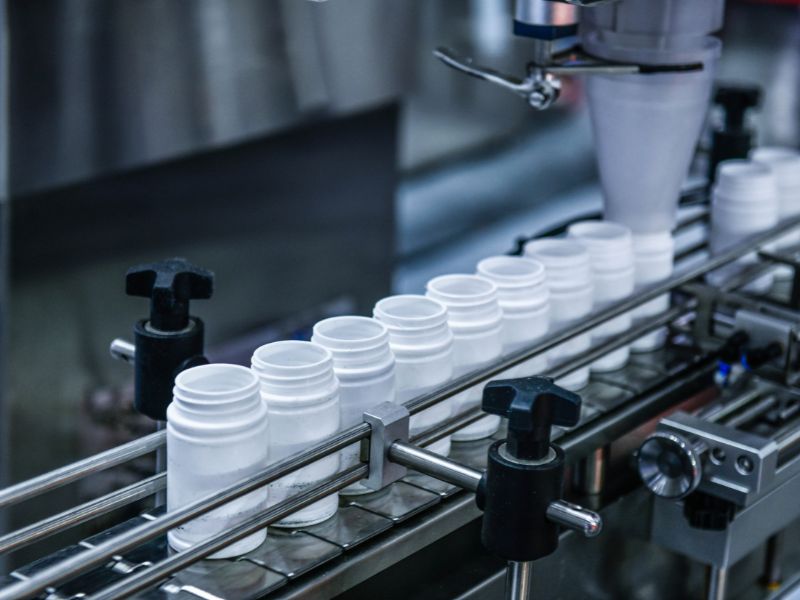
The product is transferred to the filling line and dispensed into containers using automated or semi-automated systems.
Filling formats may include:
- Stand-up pouches
- Stick packs
- Sachets
- Bottles
- Jars
- Tubs
- Bulk containers
Each format requires specialized machinery designed for accuracy and speed. Skilled operators monitor the line to ensure every container meets specifications.
6. Sealing, Capping, and Induction Lining
After filling, containers move immediately to sealing or capping stations. This step protects product integrity and ensures compliance with retailer and regulatory standards.
Sealing may include:
- Heat sealing for pouches
- Snap or screw caps for bottles
- Induction seals for tamper evidence
- Multi-layer seals for sensitive products
Proper sealing prevents leaks, contamination, and shelf life issues.
7. Labeling and Coding
Containers are then labeled and coded with essential information such as:
- Product description
- Lot number
- Expiration or best-by date
- Regulatory details
- Branding elements
Automated labelers and vision systems help ensure accuracy and alignment.
8. Quality Checks Throughout the Process
Quality is monitored at multiple points during filling and packaging. Standard checks include:
- Checkweighing
- Seal integrity tests
- Metal detection
- Label accuracy
- Sample retention
- Final QC release
These checks protect brand reputation and ensure consistency across production runs.
9. Case Packing, Palletization, and Fulfillment
Once packaged, products move into secondary packaging and preparation for shipping. This may include:
- Tray forming or carton packing
- Shrink-wrapped bundles
- Palletizing
- Stretch wrapping
- Warehouse storage
- Direct-to-retail or distributor shipping
Turnkey partners may also provide complete fulfillment services to streamline distribution.
Why Brands Choose Contract Filling and Turnkey Packaging
Contract filling is more than equipment access. It is an operational strategy that supports growth.
Benefits include:
- No capital investment in equipment
- Faster scale-up and shorter lead times
- Accurate and consistent production
- Reduced labor and training burden
- Lower risk of downtime
- Greater flexibility for new SKUs
- Stronger quality control
Turnkey packaging strengthens these benefits by consolidating blending, filling, and fulfillment under one roof.
How MaxUS Supports the Full Filling and Packaging Process
MaxUS delivers complete contract filling and turnkey packaging solutions for powders, liquids, pastes, and granules. Our systems are designed to adapt quickly, run efficiently, and maintain consistent quality across every batch.
We provide:
- Blending and mixing support
- Automated and semi-automated filling
- Flexible packaging for pouches, bottles, jars, stick packs, and more
- Clean room production for sensitive formulas
- Labeling, coding, sealing, and inspection
- Retail ready and bulk packaging
- Full fulfillment and distribution
- Quality assurance from start to finish
Our goal is to simplify your production and give your brand the operational strength it needs to grow.
Key Takeaways
- Contract filling supports efficient, accurate packaging of powders, liquids, and pastes.
- The process includes intake, blending, line setup, filling, sealing, labeling, and fulfillment.
- Turnkey packaging consolidates every step under one roof for maximum efficiency.
- MaxUS provides end-to-end filling and packaging solutions for growing CPG brands.
If you want a reliable partner to handle blending, filling, packaging, and distribution under one roof, MaxUS can help. Our turnkey filling solutions streamline every step from formulation to final shipment.Connect with us to explore a complete contract filling and packaging solution built around your product.