


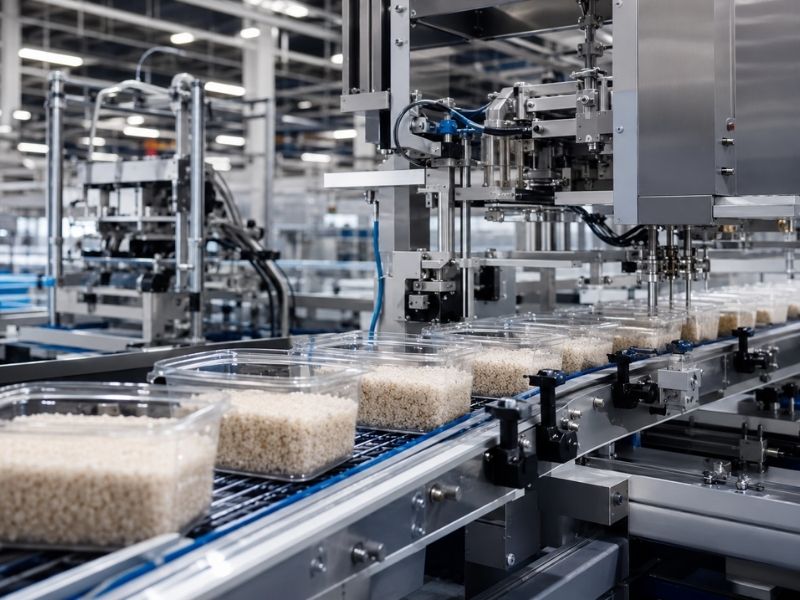
Rigid packaging may look similar across products, but the requirements behind it are very different depending on what you are packaging.
For food products, packaging is tied directly to safety, compliance, and shelf life. For non-food products, the focus often shifts to durability, usability, and cost efficiency. Understanding these differences is critical when designing packaging systems that perform at scale.
Choosing the wrong approach can create risk, delay production, or limit your ability to grow.
Why the Application Changes Everything
Rigid packaging is not a one-size-fits-all solution.
The same bottle or container may be used across industries, but the standards behind it vary significantly.
The key difference comes down to:
- Regulatory requirements
- Environmental control
- Quality assurance processes
- Production and handling protocols
For companies evaluating packaging strategies, these factors should drive decision-making from the start.
Rigid Packaging Requirements for Food Products
Food applications require a higher level of control and compliance.
1. Strict Safety and Compliance Standards
Rigid packaging for food must meet industry regulations, including:
- Food-grade material requirements
- Compliance with FDA, ISO, and SQF standards
- Proper sealing to prevent contamination
These requirements ensure that products remain safe throughout production, storage, and distribution.
2. Controlled Production Environments
Food packaging often requires:
- Clean room environments
- Strict sanitation protocols
- Controlled handling processes
This is where food grade toll processing becomes important.
Working with partners who offer food-grade environments ensures that products are handled safely and consistently at every stage.
3. Shelf Life and Product Stability
Rigid packaging plays a critical role in maintaining shelf life.
For food products, packaging must:
- Protect against moisture and air exposure
- Maintain product integrity over time
- Support consistent storage conditions
Even small inconsistencies can impact product quality and safety.
Rigid Packaging Requirements for Non-Food Products
Non-food applications often prioritize performance and efficiency over regulatory complexity.
1. Durability and Protection
Rigid packaging for non-food products is often designed to:
- Withstand transportation and handling
- Protect against physical damage
- Maintain product structure
This is especially important for products that move through complex supply chains.
2. Flexibility in Design and Materials
Non-food packaging allows for more flexibility in:
- Material selection
- Container design
- Packaging configurations
Without the same level of regulatory constraints, companies can optimize for cost and efficiency.
3. Cost and Operational Efficiency
For many non-food products, packaging decisions focus on:
- Reducing material costs
- Improving production speed
- Streamlining packaging operations
Rigid packaging still provides structure and consistency, but with fewer compliance requirements to manage.
Key Differences That Impact Your Operation
Understanding the differences between food and non-food applications helps guide better decisions.
Food applications require:
- Higher compliance standards
- Controlled production environments
- Greater focus on safety and shelf life
Non-food applications focus on:
- Durability and protection
- Cost efficiency
- Flexible design options
These differences impact not only packaging selection but also the systems and partners you need.
The Role of the Right Packaging Partner
Choosing the right partner is essential, especially when working across both food and non-food products.
A strong partner should be able to:
- Support both regulated and non-regulated environments
- Provide clean room capabilities for food applications
- Offer flexible solutions for non-food packaging
- Scale operations as demand increases
For food applications, experience with food grade toll processing is especially important to ensure compliance and consistency.
How to Make the Right Decision
When evaluating rigid packaging for your product, consider:
- Whether your product requires food-grade handling
- The level of regulatory compliance needed
- Your production and scaling goals
- The complexity of your supply chain
Aligning these factors ensures that your packaging supports both performance and growth.
Where Rigid Packaging Fits in a Scalable Strategy
Rigid packaging can support both food and non-food applications when systems are designed correctly.
To scale effectively:
- Packaging processes should align with product requirements
- Production environments should match compliance needs
- Partners should be able to adapt to different applications
This creates a flexible system that can support a wide range of products.
Your Full-Service Packaging Partner
Rigid packaging serves different purposes depending on the product, and understanding those differences is key to building an efficient, scalable operation.
If you are evaluating packaging solutions for food or non-food products, MaxUS Operations can help you design a system that meets your requirements and supports long-term growth.