


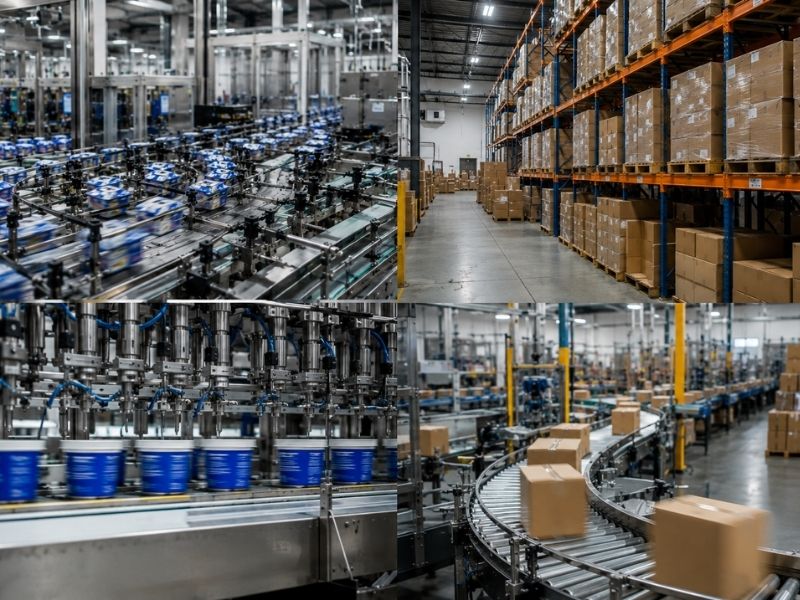
Some see toll manufacturing as a last resort. Others assume it means giving up control. In reality, it’s a strategic tool that helps companies scale, stay flexible, and execute under pressure.
Understanding what’s true and what’s not can help you make better decisions, especially when you’re considering whether to outsource packaging or expand your internal capabilities.
Why Misconceptions Exist
Most misconceptions come from comparing toll manufacturing to traditional outsourcing models.
Teams often assume:
- Less control
- Lower quality
- More complexity
But it operates differently. It is designed to extend your capabilities, not replace them.
Misconception #1: “You Lose Control Over Your Product”
This is one of the most common concerns.
What people think:
You hand off your product and lose visibility into production.
What’s actually true:
- You typically provide the materials or formulation
- You maintain control over specifications
- You stay involved in the process
It is not about handing off control. It is about sharing execution.
Misconception #2: “It’s Only for Large Companies”
Some believe toll manufacturing is only useful at an enterprise scale.
What people think:
It is designed for large CPG brands with high volume.
What’s actually true:
It’s used by:
- Startups testing new products
- Mid-sized companies managing growth
- Large organizations handling overflow
It is especially valuable when flexibility matters more than size.
Misconception #3: “Quality Is Lower Than In-House Production”
Quality concerns often prevent teams from exploring toll manufacturing.
What people think:
External production leads to inconsistent results.
What’s actually true:
Strong packaging partners:
- Operate under strict quality standards
- Maintain consistent processes across runs
- Often have specialized expertise and equipment
In many cases, quality improves because systems are designed specifically for production efficiency and consistency.
Misconception #4: “It’s Just Another Form of Outsourcing”
Toll manufacturing is often grouped with general outsourcing.
What people think:
It is the same as choosing to outsource packaging or full production.
What’s actually true:
It’s is more specific.
- You retain ownership of materials or formulations
- The partner focuses on processing and execution
- The relationship is more collaborative
It sits between fully in-house production and full outsourcing.
Misconception #5: “It’s Only for Temporary Needs”
Some companies see toll manufacturing as a short-term fix.
What people think:
It is only useful for overflow or one-time projects.
What’s actually true:
While it is effective for short-term needs, it can also be:
- A long-term part of your production strategy
- A way to maintain flexibility as you grow
- A solution for managing ongoing variability in demand
Many companies integrate toll manufacturing into their core operations.
Misconception #6: “It Adds Complexity to Operations”
Teams often assume that adding an external partner will complicate workflows.
What people think:
More partners mean more coordination and more problems.
What’s actually true:
The right partner reduces complexity by:
- Taking ownership of execution
- Streamlining processes
- Reducing internal coordination requirements
Instead of adding complexity, toll manufacturing can simplify your operation.
When It Actually Makes Sense to Use Toll Manufacturing
Understanding the truth behind these misconceptions helps clarify when toll manufacturing is the right fit.
It makes the most sense when:
- Internal capacity is limited
- Speed to market is critical
- Demand is unpredictable
- Specialized processing is required
- You need to outsource packaging or production without losing control
In these situations, toll manufacturing becomes a strategic advantage.
How to Approach It the Right Way
To get the most value from toll manufacturing:
- Choose partners with proven experience
- Maintain clear communication and expectations
- Align on quality and production standards
- Treat the relationship as a partnership, not a transaction
This ensures the model works as intended.
Your Packaging Partner
Toll manufacturing is often misunderstood, but when used correctly, it provides flexibility, scalability, and control.
If you are evaluating how to outsource packaging or expand your production capabilities, MaxUS Operations can help you implement a toll manufacturing approach that supports your growth without adding complexity.