


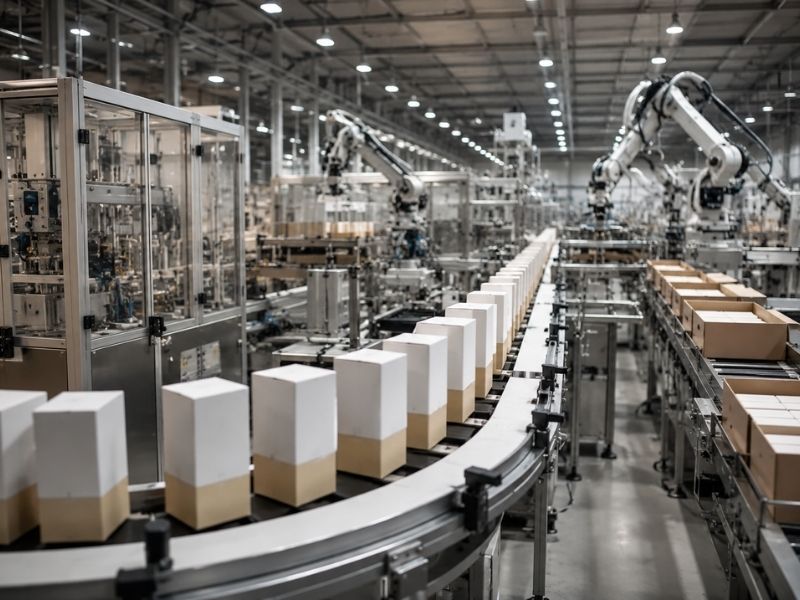
Consumer good packaging is rarely the problem when you’re small. It becomes the problem when you start to grow.
What worked for early production runs, limited SKUs, or controlled distribution channels often breaks under the pressure of expansion. As volume increases and timelines tighten, brands discover that packaging isn’t just a step in the process. It’s a system that either supports growth or slows it down.
For high-growth brands, understanding where consumer good packaging fails at scale is critical to maintaining momentum.
The Shift from Startup Simplicity to Operational Complexity
In early stages, packaging decisions are often made for speed and cost.
- Quick vendor selection
- Limited packaging formats
- Small production runs
- Manual processes
This works until growth introduces:
- Increased SKU count
- Larger order volumes
- Retail requirements
- Tighter delivery timelines
At that point, large scale packaging becomes a completely different operational challenge.
Mistake #1: Building Packaging Around the First Product, Not the Future
Many brands design their packaging process around their initial product launch.
The problem is that early decisions don’t always scale.
Common issues include:
- Packaging formats that limit automation
- Processes that require too much manual labor
- Systems that can’t handle multiple SKUs efficiently
What worked for 5,000 units doesn’t always work for 500,000.
How to Fix It
- Choose packaging formats that support scalability
- Design processes with future volume in mind
- Work with partners who can adapt as your product line grows
Mistake #2: Underestimating the Complexity of Large Scale Packaging
Scaling isn’t just increasing output. It introduces new layers of complexity.
In large scale packaging, brands often encounter:
- Production bottlenecks
- Inconsistent output across runs
- Increased coordination between teams and vendors
- Difficulty maintaining timelines
Without systems designed for scale, these challenges slow growth.
How to Fix It
- Identify bottlenecks early in the process
- Standardize workflows across production stages
- Reduce reliance on manual coordination
- Implement systems that support consistent execution
Mistake #3: Relying on Too Many Vendors
As brands grow, it’s common to add vendors to handle different parts of the process.
While this can solve short-term capacity issues, it often creates long-term complexity.
Challenges include:
- Misaligned timelines between vendors
- Increased communication overhead
- Lack of clear accountability
- Higher risk of delays
Consumer good packaging becomes harder to manage when no single partner owns the full process.
How to Fix It
- Consolidate services where possible
- Establish clear ownership for each stage
- Consider turnkey solutions to reduce coordination
- Work with partners who can handle multiple aspects of production
Mistake #4: Ignoring the Impact of Speed-to-Market
In competitive markets, speed matters.
Delays in packaging can result in:
- Missed retail opportunities
- Lost shelf space
- Reduced revenue
- Increased operational costs
Many brands underestimate how packaging impacts their ability to launch and scale quickly.
How to Fix It
- Prioritize partners that can execute under tight timelines
- Build flexibility into your packaging strategy
- Plan for surge capacity during peak demand
- Align packaging operations with go-to-market timelines
Mistake #5: Treating Packaging as a Cost Center Instead of a Growth Lever
One of the biggest mindset shifts happens when brands stop viewing packaging as just a cost.
At scale, consumer good packaging directly impacts:
- Operational efficiency
- Product consistency
- Customer experience
- Brand perception
Focusing only on cost often leads to decisions that create inefficiencies elsewhere.
How to Fix It
- Evaluate packaging decisions based on total operational impact
- Consider long-term scalability, not just short-term savings
- Invest in systems and partners that support growth
How High-Growth Brands Stay Ahead
Brands that scale successfully approach packaging differently.
They:
- Plan for growth early
- Build systems that can adapt
- Reduce complexity wherever possible
- Work with partners who understand both speed and scale
Instead of reacting to challenges, they design operations that can handle them.
Your Partner for Consumer Goods Packaging
Consumer goods packaging becomes more complex as you grow, but it doesn’t have to slow you down.
If your brand is scaling and your packaging operations are starting to feel strained, MaxUS Operations can help you build a system designed for speed, flexibility, and long-term growth.