


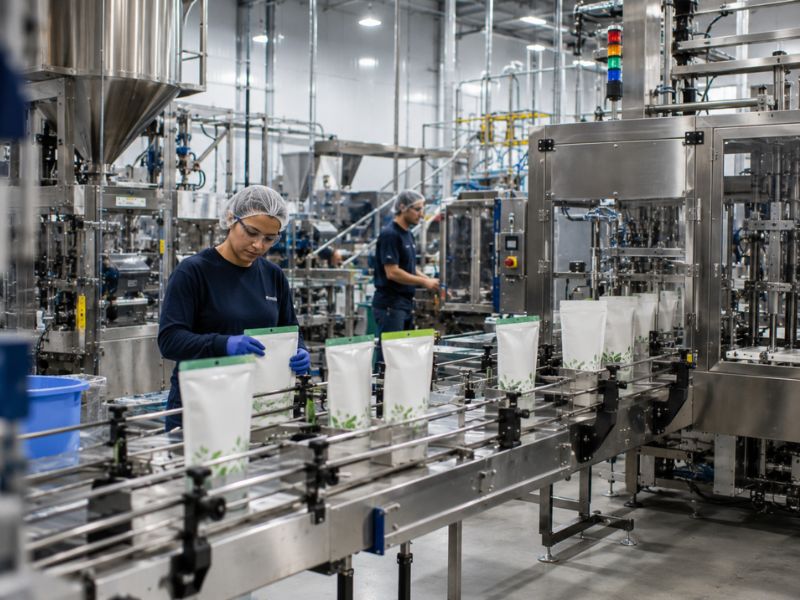
A lot of contract manufacturers are built for one of two extremes: small trial runs for brands just starting out, or massive volume for established enterprise clients. Mid-size packaging runs — too big for a prototype-focused shop, too small to be a priority for an enterprise-scale facility — fall into a gap that a surprising number of growing brands discover the hard way.
Why Mid-Size Runs Get Overlooked
Packaging specialists optimize their operations around a target customer profile, and that profile usually sits at one end of the volume spectrum or the other. A facility built for high-volume enterprise runs may treat a mid-size order as a scheduling inconvenience that gets bumped when a larger client needs the line, while a startup-focused shop may simply lack the equipment capacity to run the volume at all.
What Startup-Focused Partners Struggle With at This Volume
- Equipment sized for trial batches, not sustained mid-size production runs
- Limited staffing that can’t absorb a jump from hundreds to tens of thousands of units
- Pricing models built around small-batch flexibility, not volume efficiency
- Warehousing and shipping processes designed for small parcel volume, not pallet-level freight
What Enterprise-Focused Partners Overlook Too
On the other end, outsourced packaging built around enterprise clients sometimes deprioritizes mid-size orders in scheduling, since the per-run margin looks smaller relative to a major account. A mid-size brand can end up waiting for line time behind larger, higher-priority customers, even when their order is well within the facility’s technical capability.
Labor and Changeover Needs at the Middle Volume
Contract packaging applications at mid-size volume need labor flexible enough to staff up for a run without the fixed overhead of a dedicated enterprise-scale crew. Changeovers matter more here too — a facility built for long, uninterrupted enterprise runs may not have efficient changeover processes tuned for a mid-size brand running multiple SKUs through the same line.
Finding a Partner Built for This Range
A packaging service genuinely built for mid-size runs will describe its typical customer volume in specific numbers, not vague reassurances that any size works there. Contract manufacturers with a real track record at this scale can usually point to changeover times, typical order sizes, and scheduling flexibility as concrete evidence instead of a general capability statement.
Signs a Facility Actually Runs Mid Sized Packaging Runs Well
- Recent references or case studies from brands at a similar volume, not just enterprise-scale examples
- A quoted lead time that doesn’t assume your order slots in behind a much larger client
- Pricing that reflects genuine volume efficiency, not a small-batch rate applied to a bigger order
- Willingness to discuss what happens as your volume grows further, not just the current order
What Happens When a Brand Outgrows Its Original Partner
A brand that started with a startup-focused packager sometimes hits a wall right around mid-size volume, where the original partner’s equipment or staffing simply can’t keep pace. Recognizing that ceiling early, before a growth spurt forces a rushed transition to a new partner mid-launch, gives a brand more room to evaluate options calmly instead of scrambling under a deadline.
FAQs
What volume typically counts as a mid-size packaging run?
There’s no fixed threshold, but mid-size runs generally fall between a few thousand and a few hundred thousand units — large enough to strain a startup-focused facility, but not yet at the scale that dominates an enterprise production schedule.
Why do some contract manufacturers avoid mid-size orders?
Mid-size orders can require more scheduling flexibility and changeover efficiency than a facility optimized for either small trial batches or long enterprise runs is built to provide, making them less profitable to prioritize.
Do mid-size packaging runs cost more per unit than larger orders?
Often, yes, since per-unit costs generally decrease with volume, but a mid-size run should still see meaningfully better pricing than a small trial batch if the partner has the right equipment and processes for that scale.
How do I know if a packaging service is actually set up for mid-size volume?
Ask for specific numbers — typical order size, changeover time between SKUs, and current scheduling availability — instead of accepting a general assurance that the facility can handle any volume.
Built for the Volume Between Startup and Enterprise
MaxUS runs contract packaging applications across a wide volume range, with changeover processes built for brands scaling past trial runs but not yet at enterprise scale. Curious whether your volume fits? Tell us your numbers.