

A personal care product rarely ships as a single item on a single line. Creams need precise fill volumes, sets need multiple components assembled into one retail unit, and the finished package needs to look right on a shelf next to established competitors. Personal care packaging covers all three of those stages, and skipping coordination between them tends to show up as a delay right before launch.
What Falls Under Personal Care Packaging
The category spans lotions and creams in rigid jars or bottles, single-use sachets in flexible pouches, and multi-item sets that combine several products into a single retail-ready package. Cosmetic packaging in particular often needs precise fill volumes and a finished look that matches a brand’s positioning on the shelf, not just a functional seal.
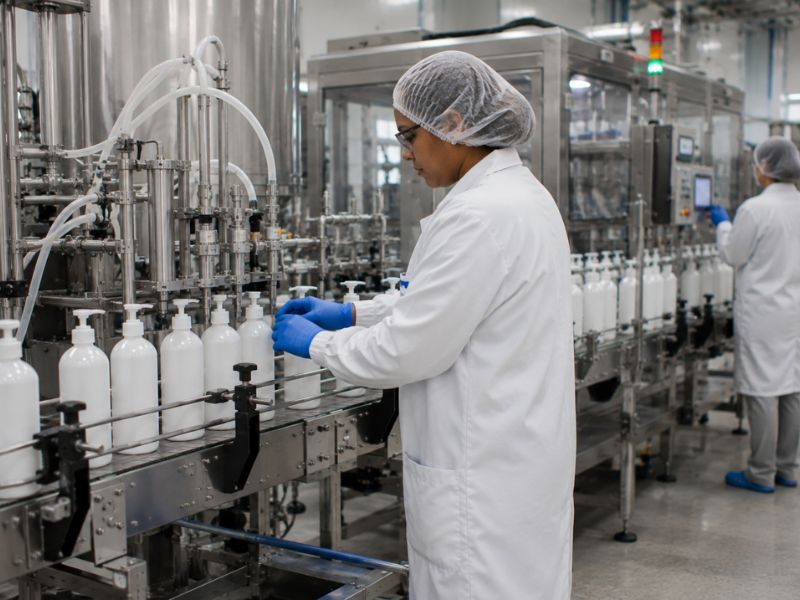
Filling Considerations for Creams, Liquids, and Powders
- Viscosity range affects which fill equipment applies — a thin serum and a thick cream rarely run on the same head without adjustment
- Fill accuracy tolerances tend to run tighter for personal care than for many bulk CPG categories
- Powder-based products, like bath or mineral blends, need dust control similar to dry food formats
- Contract manufacturing partners experienced across multiple viscosities generally handle format changes with less line downtime
Kitting and Sub-Assembly for Multi-Component Products
Gift sets, starter kits, and multi-step routines bundle several individually packaged items into one retail unit. Sub assembly services handle that final step — collecting each component, arranging them, and sealing the finished kit — and coordinating that stage on the same schedule as the individual component filling avoids a kit run stalling out while waiting on one late piece.
[Suggested image: Personal care gift set with multiple bottles arranged in a retail box — alt text: “personal care packaging kitting and sub assembly”]
Retail Presentation and Custom Packaging
A personal care product’s packaging does double duty as its primary marketing surface. Customized packaging — unique shapes, finishes, or closures — helps a product stand apart on a shelf crowded with similar items, and packaging retail solutions like point-of-purchase displays or club store assemblies extend that presentation beyond the individual unit.
Where a Cosmetic Toll Manufacturer Fits In
A cosmetic toll manufacturer runs a specific production step — filling, blending, or packaging — on a brand’s existing formulation without taking ownership of the product. Some personal care brands use a toll manufacturer for one stage and handle the rest with a separate partner, though coordinating filling, kitting, and retail packaging under a single point of contact generally keeps a launch timeline more predictable.
Planning Lead Time Around Multiple Production Stages
A personal care launch with filling, kitting, and custom retail packaging involved has more places for a schedule to slip than a single-stage production run. Each stage depends on the one before it finishing on time, so a delay in filling pushes the kitting date, which pushes the retail-ready delivery date in turn. Brands planning a launch date around a specific retail window benefit from building in buffer time at each handoff, rather than assuming every stage will run exactly on schedule.
FAQs
Does personal care packaging require different filling equipment than food products?
Often, yes — personal care formulations span a wider viscosity range and frequently need tighter fill accuracy, which calls for equipment calibrated specifically for creams, serums, or powders rather than general-purpose fill heads.
What counts as sub assembly in a kitting run?
Sub assembly typically covers combining multiple finished components — bottles, sachets, inserts, or printed materials — into a single retail-ready unit, distinct from filling or packaging any one item on its own.
Can a cosmetic toll manufacturer handle both filling and final packaging?
Many can, though scope varies by partner — it’s worth confirming whether a toll manufacturer covers the full process or just one production step before assuming full coverage.
How is customized packaging different from standard retail packaging?
Customized packaging typically involves a unique shape, closure, or finish built around a brand’s specific look, while standard retail packaging uses existing container and format options — the trade-off is usually cost and lead time versus shelf differentiation.
Filling, Kitting, and Retail Assembly Under One Roof
MaxUS supports personal care brands across filling, kitting and retail assembly, and finished packaging through contract manufacturing. Tell our team about your product mix and kit structure through this contact form and we’ll map out the production path.