


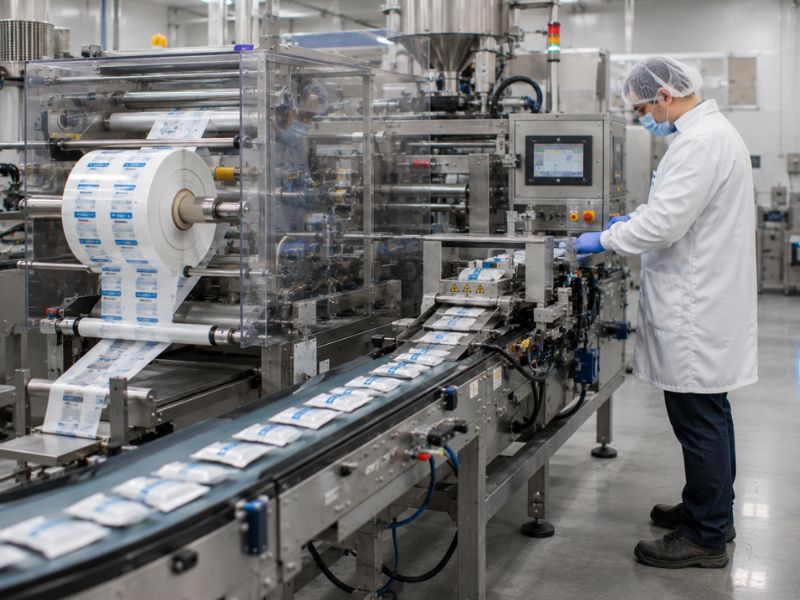
A single-serve package looks like the simplest format on the shelf — one dose, one seal, one use. Single-serve packaging is often the hardest format to run consistently at scale, because every variable that a larger format can absorb shows up immediately in a package this small, from a slightly uneven fill to a seal that seats a fraction of a millimeter off.
Why Small Format Doesn’t Mean Simple
A fill variance that’s negligible in a large container becomes a visible percentage error in a single-serve packet. Packaging operations built for single-serve formats need tighter tolerances at every stage, from dosing to sealing, because there’s far less room to average out inconsistency across the unit.
Dosing and Fill Accuracy at Single-Serve Scale
- Fill weight tolerances typically run tighter in percentage terms than bulk or multi-serve formats
- Product characteristics like viscosity or particle size directly affect dosing consistency at small volumes
- A single serve packaging machine needs calibration specific to the product, not a generic small-format setting
- Temperature and humidity variation on the production floor can shift fill consistency more noticeably at small volumes than at larger ones
Material Choice for Single-Serve Formats
Material selection carries more weight per unit at single-serve scale. A seal failure on one packet affects a single dose, but a seal integrity issue across a production run multiplies fast when thousands of small packets move through a line in the time a larger format would take to fill a fraction as many units.
Line Speed and Equipment Considerations
Pouch filling machines built for single-serve output generally run at higher unit speeds than large-format lines, which raises the stakes of any calibration drift. Horizontal form fill seal packaging suits many single-serve formats well, particularly where a pre-formed pouch shape matters more than raw throughput.
Labor and Changeover Realities
Product packaging at single-serve scale often demands more frequent quality checks than larger formats, simply because more individual units pass through inspection points per hour. Changeovers between single-serve SKUs also tend to require more precise recalibration than switching between larger container sizes on the same line.
Retail Presentation for Single-Serve Products
Turnkey food packaging brands leaning into single-serve formats often do so for portion control or trial-size retail positioning. That presentation goal doesn’t reduce the production complexity underneath it — a well-branded single-serve packet still has to hit the same dosing and seal standards as any other format, just at a smaller and less forgiving scale.
Weighing the Cost of Complexity Against the Format’s Benefits
Single-serve packaging costs more per unit to produce than bulk or multi-serve formats, but that cost buys real advantages: trial-size retail entry points, portion-controlled dosing, and travel-friendly formats that larger packages can’t offer. The decision usually isn’t whether single-serve is worth the added production complexity in the abstract, but whether a specific product and retail strategy justify that cost for this particular launch.
FAQs
Why does single-serve packaging cost more per unit than bulk packaging?
Fill accuracy tolerances, higher line speeds, and more frequent quality checks all add cost per unit compared to bulk formats, where minor variances have less relative impact on the finished package.
What’s the difference between a single serve packaging machine and a standard fill line?
A single serve packaging machine is generally calibrated for smaller, more precise fill volumes and faster unit-per-minute output than a standard line built for larger container formats.
Can pouch filling machines run both single-serve and multi-serve formats?
Some can, with recalibration between runs, though a facility running high volumes of both often dedicates separate lines to avoid the downtime that frequent format switching creates.
Does single-serve packaging require more frequent quality checks?
Generally, yes — with more individual units moving through a line per hour, inspection frequency usually increases to catch fill or seal issues before they affect a large batch of small packages.
Small Format, Full Production Control
MaxUS runs single-serve production across flexible packaging formats, with filling, blending, and mixing calibrated for the tighter tolerances small formats demand. Considering a single-serve line for your product? Start a conversation with our team.