

Many CPG founders first search what is private label manufacturing when they want a fast, low-risk way to launch or expand their product lines. Private label manufacturing has grown rapidly because it gives brands access to ready-made products, proven formulas, and established production systems without the high cost of custom development.
Retailers, emerging brands, and even large CPG companies use private label manufacturing to expand into new categories, respond to trends, and increase SKU variety without overwhelming their internal teams.
What Is Private Label Manufacturing
Private label manufacturing is a production model where a manufacturer creates a complete, ready-to-brand product that another company can sell under its own label. The manufacturer owns the formula, controls the production process, and maintains the quality systems. The brand selects the product, provides packaging and branding direction, and manages sales.
This model is different from custom contract manufacturing because the product is already formulated. Brands do not need to invest in R&D, pilot runs, stability testing, or formulation refinement. They simply choose from the private label manufacturer’s available offerings.
Private label contract manufacturing is used across:
- Nutritional supplements
- Food and beverage
- Beauty and personal care
- Household and cleaning products
- Health and wellness lines
- Specialty or niche CPG categories
Its simplicity and speed make it one of the fastest ways to build or expand a product portfolio.
Why Private Label Manufacturing Is Growing So Quickly
Private label manufacturing has exploded in popularity for several reasons. Consumers trust high-quality store brands, retailers want broader assortments, and emerging companies want to launch quickly without major risk.
Here are the biggest drivers behind its growth.
1. Lower Startup Costs
Developing a custom product requires significant investment in:
- Formulation work
- Testing and validation
- Ingredient sourcing
- Pilot production
- Packaging compatibility testing
Private label manufacturing eliminates most of these costs. The manufacturer has already done the development, which lowers financial barriers for new brands.
2. Faster Time to Market
Because the formulas already exist, brands can go from concept to shelves quickly. This is especially important when entering fast-moving categories.
Private label manufacturing supports:
- Trend-driven launches
- Seasonal offerings
- Retailer-specific assortments
- Quick expansion into new categories
Speed is one of the strongest competitive advantages in CPG manufacturing.
3. Better SKU Flexibility
Brands can add, adjust, or expand SKU lines without disrupting existing operations. Manufacturers often offer multiple variations of flavors, scents, sizes, or formats, which makes it easy to test new ideas.
Private label contract manufacturing helps brands:
- Grow product lines
- Introduce limited-time SKUs
- Create exclusive retailer assortments
- Experiment with new formats
Flexibility reduces risk and encourages innovation.
4. Predictable Quality and Consistency
Private label manufacturers produce the same product consistently across every run. Their formulas are proven, stable, and supported by established quality systems.
This creates predictable:
- Batch consistency
- Ingredient purity
- Sensory attributes
- Performance or functional outcomes
For brands with limited internal QA resources, this consistency is a major advantage.
5. Reduced Operational and Staffing Burden
With private label manufacturing, the brand does not need to hire R&D teams, production staff, or line operators. The manufacturer handles all formulation, blending, filling, and packaging.
This reduces internal pressure on:
- Production scheduling
- Quality oversight
- Material handling
- Staffing and training
- Facility space and overhead
Brands can stay lean while still scaling rapidly.
How Private Label Manufacturing Works
The private label manufacturing process is simple, structured, and designed for speed.
1. Product Selection
The brand chooses from a catalog of ready-made formulas and product types.
This may include:
- Powders
- Liquids
- Capsules or tablets
- Creams, gels, or pastes
- Shelf-stable foods
- Household products
Each product already has a track record of performance and quality.
2. Packaging and Branding Choices
Brands select:
- Container type
- Label design
- Size or format
- Packaging materials
Some private label manufacturers offer flexible packaging options such as pouches, bottles, jars, stick packs, or sachets.
3. Production and Filling
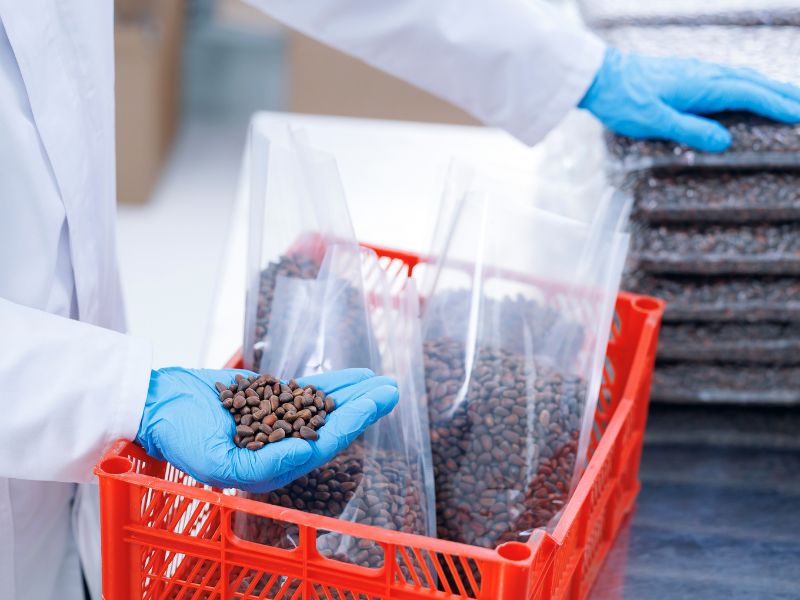
The manufacturer blends, fills, seals, and packages the product according to brand specifications. Automated systems ensure accuracy and quality across each batch.
4. Quality Assurance
QA teams:
- Verify formulations
- Check fill accuracy
- Confirm label placement
- Test seal integrity
- Maintain documentation for compliance
This protects the brand’s reputation from the very beginning.
5. Delivery or Distribution
Finally, products move into:
- Warehousing
- Direct-to-retail shipping
- Fulfillment operations
- Bulk delivery
Turnkey partners provide an even smoother path by handling fulfillment under the same roof.
When Private Label Manufacturing Is the Best Choice
Private label is ideal when brands want to:
- Launch quickly
- Reduce development cost
- Expand SKU variety
- Test new categories
- Produce retail-ready products
- Operate with limited internal resources
- Scale without major investment
Many brands begin with private label and transition to custom contract manufacturing once they grow or want proprietary formulas.
How MaxUS Supports Private Label Manufacturing Growth
MaxUS works with private label brands by providing high-quality packaging, filling, and fulfillment support that prepares products for market. Although MaxUS does not create private label formulas, our turnkey production systems make it easy for brands to scale private label products quickly and reliably.
We support private label manufacturing through:
- Flexible packaging for pouches, bottles, jars, stick packs, and sachets
- Blending and mixing when formulations require preparation
- Clean room environments for sensitive products
- Automated and semi-automated filling
- Labeling, coding, and inspection
- Retail-ready packaging and distribution
- Bulk packaging for B2B customers
This end-to-end support helps private label brands grow with confidence.
Key Takeaways
- Private label manufacturing gives brands a fast, low-cost path to market.
- It eliminates the need for R&D, formulation work, and internal equipment.
- Private label supports SKU flexibility and quick response to market trends.
- MaxUS helps private label brands scale with packaging, filling, and turnkey operational support.
If your team wants to expand quickly, enter new categories, or bring private label products to market with speed and confidence, MaxUS can help. Our turnkey packaging and production services support reliable, scalable private label growth.
Connect with us to explore how private label manufacturing and packaging support your next phase.