


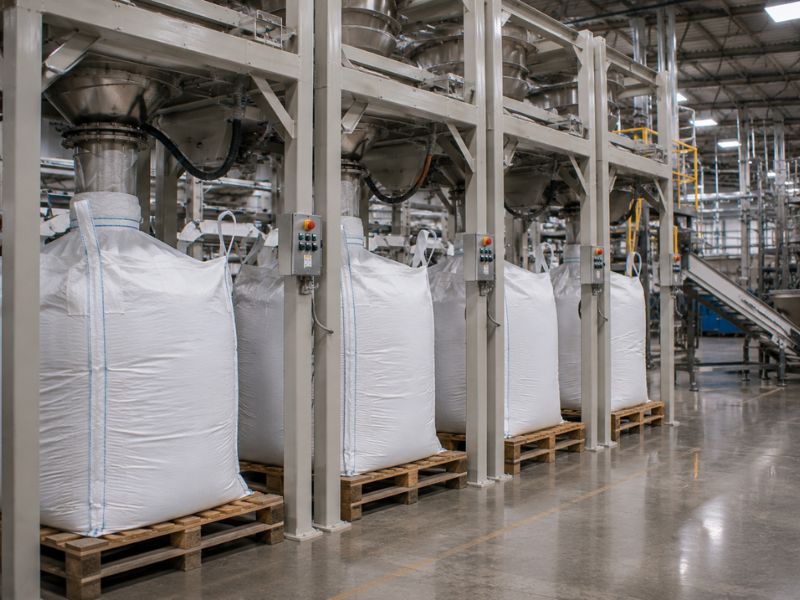
Every hand-off between vendors adds a delay, a cost, and a chance for something to go wrong. Bulk packaging solutions exist to cut down on those hand-offs — moving product from production straight into drums, totes, or super sacks instead of routing it through multiple packagers before it’s ready to ship or store.
What Counts as Bulk Packaging
Bulk packaging covers large-format containers built to move significant volume in a single unit rather than individual retail packs. MaxUS bulk packaging includes drums, totes, and super sacks, sized for freight and storage efficiency rather than shelf presentation.
Why Fewer Hand-Offs Actually Matters
Each additional vendor in a production chain introduces its own lead time, on top of whatever production itself takes.
- Each hand-off adds its own scheduling lead time, independent of how fast production runs
- Product quality risk increases every time material changes hands or transportation modes
- Coordinating multiple vendor schedules becomes a project of its own, layered on top of production
- Fewer parties involved means fewer places for a miscommunication to cause a delay
Where Bulk Packaging Fits in a Turnkey Process
Brands that outsource packaging end-to-end typically put bulk formats at the front of the process — product blended and filled directly into bulk containers, then moved into storage or repackaging without an extra vendor in between. That’s the core of a turnkey packaging solution: production, packaging, and the handoff to storage or fulfillment happening under a single point of coordination.
Sustainable and Green Bulk Format Considerations
A green bulk packaging solution typically means reusable or recyclable containers, reduced material weight per unit shipped, or totes designed for return and reuse rather than single use. Whether that trade-off makes sense depends on shipping distance, return logistics, and how the container gets used once it arrives.
- Reusable totes reduce packaging waste on repeat orders with the same buyer
- Reduced material weight relative to case-packed retail units lowers freight cost per shipment
When Bulk Packaging Isn’t the Right Call
Bulk packaging solves for volume and handling efficiency, not consumer-facing presentation. Products headed straight to a retail shelf still need repackaging into individual, branded units downstream, so bulk formats typically support an earlier stage of the supply chain rather than the final one.
How Bulk Formats Affect Freight and Storage Planning
Moving to a bulk packaging solution changes more than the container on the line — it changes how a warehouse plans space and how freight gets quoted.
- Palletized drums or totes typically load more predictably than mixed case sizes, simplifying warehouse slotting
- Freight carriers often price bulk containers differently than standard case freight, which is worth quoting separately rather than assuming a direct cost comparison
- Storage footprint per unit of product is usually smaller in bulk than in individually cased retail units
- Inbound receiving processes at a warehouse may need adjustment for bulk container handling equipment, like pallet jacks rated for drum weight
FAQs
What size order justifies switching to bulk packaging?
There’s no fixed threshold, but bulk formats generally make sense once an order’s volume makes individual case-pack handling inefficient relative to moving product in drums, totes, or sacks instead.
Can product packaged in bulk later be repacked into retail-ready units?
Yes, bulk containers are commonly used as an intermediate step before a separate repackaging run into consumer-facing formats, which keeps the bulk and retail stages efficient on their own terms.
Is a green bulk packaging solution more expensive than a standard drum or tote?
It depends on the format — reusable containers can cost more upfront but reduce per-shipment packaging spend over repeat orders, while recyclable single-use options often land closer to standard bulk pricing.
Does bulk packaging reduce freight costs compared to individually packed cases?
Often, yes, since bulk containers typically improve load density and reduce packaging material weight relative to the same volume shipped in individual retail cases.
Fewer Vendors, Fewer Hand-Offs
MaxUS Operations fills and packages bulk packaging formats — drums, totes, and super sacks — with fulfillment support handled under the same roof. If you’re weighing bulk formats against a multi-vendor process, get in touch and we’ll map out what fits.
Related reading: for the broader turnkey approach, see Turnkey Packaging Solutions: From Blending to Fulfillment Under One Roof, and for common failure points at scale, see What Breaks First in Large-S