


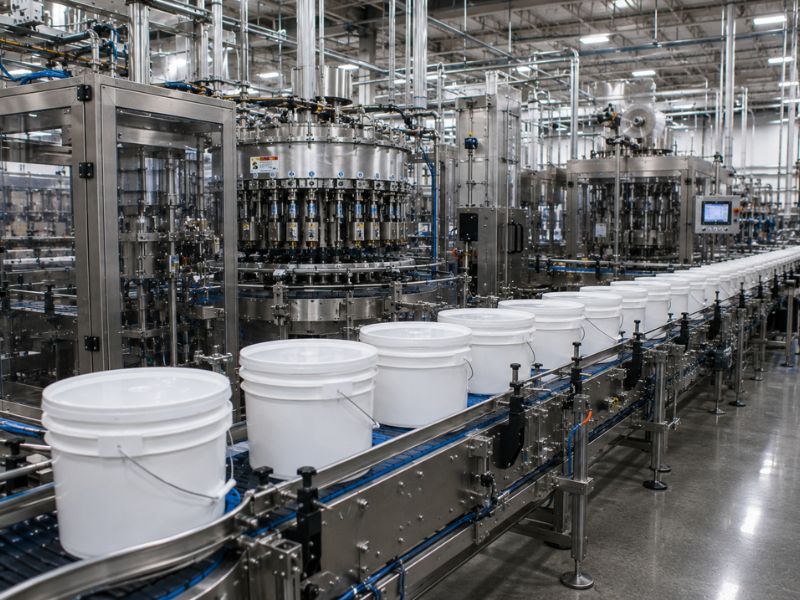
Bottles, jars, cups, canisters, and tubs all fall under rigid packaging, but each container shape solves a different production and shelf problem. Picking the wrong one for a product usually shows up later as a filling delay or a retail return, not as a failure that’s obvious upfront.
Bottles: Best Fit for Liquids and Pourable Products
Bottles remain the default choice for pourable liquids, and for good reason — the format is well understood by filling equipment, closures, and consumers alike. Contract bottle filling works best when viscosity, cap type, and fill accuracy are locked in early, since changes to any one of those tends to affect line speed.
Jars and Tubs: When Wide-Mouth Access Matters
Jars and tubs suit products that need to be scooped, spread, or accessed by hand rather than poured. Thicker pastes, creams, and semi-solid products generally perform better in a wide-mouth container than they would in a bottle, where a narrow neck can slow both filling and end-use.
Cups and Canisters: Portion Control and Stackability
Cups and canisters solve a different problem than bottles or jars. Cup filling systems are common for single-serve or portion-controlled products, while canister filling supports dry, granular, or powder products that benefit from a rigid, stackable container on a retail shelf.
- Cups for single-serve, portion-controlled liquid or semi-solid products
- Canisters for dry, granular, or powder products needing shelf stability
- Both formats generally stack more efficiently in case-pack shipping than irregularly shaped containers
- Closure type affects both filling speed and shelf presentation for either format
[Suggested image: Row of filled canisters and cups moving down a rigid packaging line — alt text: “rigid packaging solutions cup and canister filling”]
Matching Container to Filling Speed and Line Compatibility
Container choice affects more than shelf appearance. It determines how fast a line can run and how much manual handling a product needs.
- Neck or opening size relative to fill head compatibility
- Container wall rigidity under filling pressure and during transport
- Cap or lid application speed relative to the rest of the line
- Weight and shape consistency across a full production run
Retail Presentation Considerations
A container that fills efficiently isn’t automatically the one that performs best on a shelf.
- Label surface area and shape for branding requirements
- Shelf stability and how the container looks next to competitors in the same category
What to Look for in Rigid Packaging Companies
Not every rigid packaging supplier stocks or fills every container type, so it’s worth confirming fit before committing to a format.
- Direct experience filling the specific container shape and closure type you’ve chosen
- In-house capability across bottles, jars, cups, canisters, and tubs, rather than a single specialty
- Established relationships with rigid packaging suppliers for the container stock itself, so lead times stay predictable
- A clear answer on minimum order quantities for the container size you need
Rigid packaging companies that can move between container types without bringing in a second vendor tend to simplify scheduling considerably once a product line grows past a single format.
FAQs
What container works best for high-viscosity liquids?
Wide-mouth jars or tubs typically outperform bottles for thicker, high-viscosity products, since a narrow bottle neck can slow both the fill process and how easily the end user gets the product out.
Can canister filling handle both powders and granular products?
Yes, canister filling is commonly used for both, though dosing accuracy and dust control requirements differ between fine powders and coarser granular products.
Is contract bottle filling faster than jar or tub filling?
Often, yes — bottle lines are generally built for higher throughput with pourable liquids, while jar and tub filling tends to run slower due to thicker product viscosity and wider openings.
Do rigid packaging containers cost more than flexible formats?
Typically yes, both in material cost and freight due to added weight, though rigid formats can be worth the difference for products where shelf stability or wide-mouth access is a functional requirement, not just a preference.
Container Guidance Before Your Next Production Run
MaxUS Operations fills and packages across rigid packaging formats, including bottles, jars, cups, canisters, and tubs, with retail-ready presentation handled under the same roof. If you’re deciding between container types for an upcoming run, reach out and we’ll help you match the container to the product.