


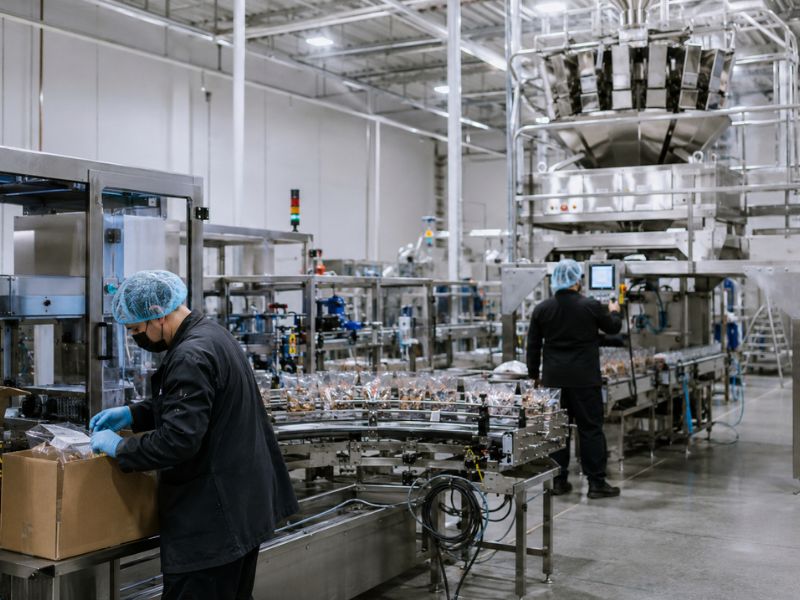
Most brands start out packaging their own products. It’s cheaper up front, it’s fully within your control, and for a while, it works. Then volume climbs, SKUs multiply, or a retail order lands that your line was never meant to handle. The question shifts from “can we keep doing this ourselves?” to “should we?” That’s the moment to start evaluating contract packaging services.
There’s no single revenue number or unit count that makes the decision for you. But there are consistent, recognizable signals that tell you that outsourced packaging is the smarter operational move.
The Warning Signs Your In-House Line Can’t Keep Up
Before comparing vendors or running the numbers, it helps to know what you’re actually looking for. Brands typically start exploring contract packaging services when they notice a combination of the following:
- Production is capped by equipment, not demand. Orders exist, but the line physically can’t run more units per shift.
- Labor is the bottleneck. Hiring, training, and retaining packaging staff is consuming more management time than the product itself.
- Quality is inconsistent between runs, especially when different team members are filling in on the line.
- A single large or seasonal order would require buying equipment you’d rarely use again.
- Warehousing, freight, and fulfillment are being handled as an afterthought instead of a planned process.
Any one of these on its own might just mean it’s time for a better process. Two or three together usually mean it’s time for a different structure entirely.
What Contract Packaging Services Actually Take Off Your Plate
The appeal of outsource contract manufacturing and packaging isn’t just capacity. A contract packaging partner absorbs the parts of production that don’t differentiate your brand:
- Equipment ownership and maintenance
- Hiring, training, and scheduling packaging labor
- Line setup for new formats, SKUs, or seasonal runs
- Compliance and quality checks are a part of the process, not bolted on after
- Coordination with warehousing and fulfillment once product is packaged
At MaxUS, that shows up as full contract filling and packaging support across flexible, rigid, retail, and bulk formats — backed by filling, blending, and mixing capability so packaging doesn’t stall out waiting on the step before it.
[Suggested image: Packaging line worker inspecting sealed pouches on a production line — alt text: “contract packaging services production line inspection”]
The Trade-offs Worth Weighing First
Moving to outsourced packaging isn’t free of trade-offs, and a good partner will tell you that upfront rather than oversell the switch.
- You give up some day-to-day visibility in exchange for consistency and throughput.
- Lead times shift from “whenever our line is free” to a scheduled production slot, which usually means planning further ahead, not less.
- Per-unit cost may look different than your in-house math, especially once you factor in the labor and maintenance you were previously absorbing internally.
These are all reasons to pick a partner who communicates clearly and treats your production schedule like their own.
How to Know You’re Ready
You’re likely ready to talk to a contract packaging services provider if:
- You’ve turned down or delayed an order because your line couldn’t handle it
- You’re calculating equipment ROI for a single anticipated order
- Packaging labor management has become a bigger job than running the business
- You need multiple formats (flexible, rigid, retail, bulk) and your current setup only supports one
If two or more of those are true, it’s worth a conversation. Not necessarily a commitment, just a real look at what packaging services could take off your plate.
FAQs
How much volume do I need before contract packaging services make sense?
There’s no fixed minimum. It’s less about a specific unit count and more about whether your current line, labor, or timeline is the constraint. Some brands move over at a few thousand units a month if the format is complex; others wait far longer if their in-house process is still efficient.
Will I lose control over product quality if I outsource?
A well-run contract packaging services partner should have documented quality checks built into every run, with reporting you can review — the goal is more consistency than an internal line juggling multiple responsibilities can typically maintain, not less oversight.
Can I start with contract packaging services for just one product line?
Yes. Many brands test the relationship with a single SKU or seasonal run before shifting more of their production over, which is a reasonable way to evaluate fit before committing further.
What’s the real difference between outsourcing and just buying more equipment?
New equipment solves capacity but adds fixed cost, maintenance, and labor you own permanently. Outsourced packaging solves capacity without the fixed investment, which matters most when demand is real but not yet predictable enough to justify owning the line.
Talk to a Partner Who’s Made This Move Before
Deciding when to leave in-house packaging behind is easier with a partner who’s helped other brands make the same call. MaxUS Operations offers turnkey packaging solutions across every format, backed by expert fulfillment support once product is packaged. If you’re weighing this decision, get in touch and we’ll walk through what fits your volume and timeline.
Related reading: for a food-specific breakdown, see our post comparing turnkey food packaging to running the line in-house, and our guide on how to choose the right contract packager for your product.